
Energy-efficient home improvements sound straightforward until three contractors describe the same project in completely different ways. One quote says attic insulation, another says air sealing and blown-in cellulose, and a third bundles insulation with new ductwork. For a homeowner spending $15,000, $30,000, or more, the hard part is not finding a product. It is determining what work is actually included, whether the proposed solution fits the house, and whether the promised savings justify the contract price.
Start with the problem, not the product
The strongest energy-efficient home improvements begin with a documented problem. A bedroom that is eight degrees warmer than the living room could point to poor insulation, duct leakage, solar gain, an undersized return, or several issues working together. Replacing windows immediately might make the room quieter, but it may not fix the temperature difference. A contractor who recommends a product before inspecting the cause is selling an item, not diagnosing a house.
Ask for a written description of the existing conditions. That should include insulation depth, visible gaps around plumbing and wiring, duct locations, window age, HVAC equipment, and any moisture concerns. A blower-door test or energy audit can add useful evidence, especially in an older home. The goal is not to collect impressive technical language. The goal is to create a baseline that makes the quote testable.
A credible proposal should connect each recommended measure to that baseline. If the contractor cannot explain why attic air sealing comes before adding insulation, or why a heat pump requires electrical and condensate planning, slow down before signing.
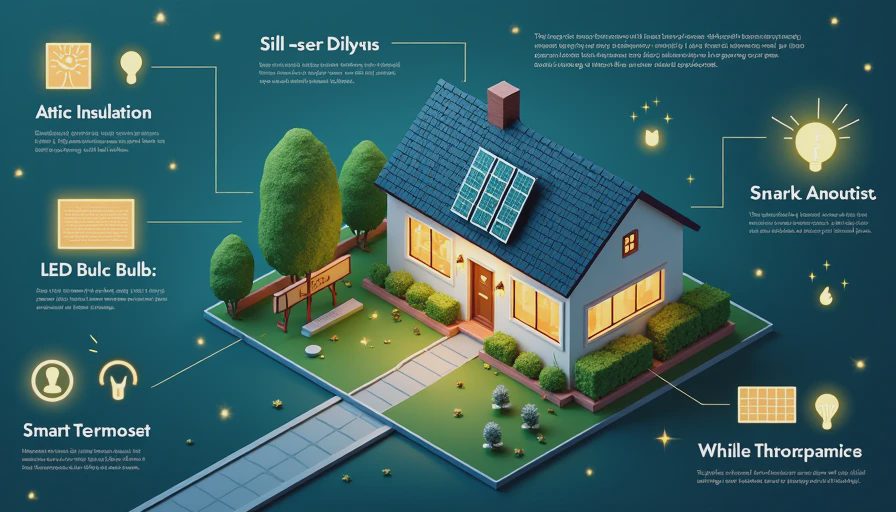
How to compare energy-efficient home improvements quotes
Comparing energy-efficient home improvements quotes requires more than placing the totals side by side. Create a scope comparison with one row for each major task. For attic work, record the insulation type, target R-value, square footage, air-sealing locations, ventilation treatment, access method, and cleanup obligations. For HVAC work, record the equipment model, capacity, efficiency rating, thermostat, line-set work, electrical changes, permits, startup testing, and warranty terms.
A $9,800 attic proposal and a $6,400 proposal may not be competing offers. The lower price could exclude air sealing, baffles, removal of damaged insulation, or the labor required to move stored items. A window quote that includes only replacement units may leave the homeowner responsible for trim repair and interior painting. Those omissions often appear after demolition, when changing contractors is expensive and stressful.
Ask every bidder to price the same scope. If a contractor recommends a different approach, request a separate alternate with its own price and explanation. This preserves a fair comparison without forcing every professional into an identical design.
Read the contract for measurable deliverables
Energy-efficient home improvements should be described with quantities and completion standards, not broad promises. The contract should identify the number of windows, insulation area, equipment model, duct sections, electrical circuits, disposal method, and expected completion date. Phrases such as improve efficiency, install premium materials, or bring comfort up to modern standards are too vague to protect a homeowner.
For insulation, look for coverage depth and treatment around recessed lights, attic hatches, chimneys, and top plates. For air sealing, ask whether the crew will seal penetrations with compatible materials rather than ordinary household caulk. For HVAC replacement, require the exact model numbers and the planned commissioning process. A heat pump should not be judged only by its advertised efficiency; sizing, duct compatibility, controls, and installation quality matter just as much.
Payment terms deserve equal attention. A deposit of 10% to 30% is common for substantial work, but a demand for nearly the full price before materials arrive transfers too much risk to the homeowner. Tie progress payments to visible milestones, and keep a written change-order process for anything outside the original scope.
Watch the payback calculation
Contractors sometimes present energy-efficient home improvements with a simple payback estimate, such as a $20,000 project that supposedly saves $200 each month. Treat that figure as a planning scenario, not a guarantee. Utility rates change, household behavior changes, and savings depend on whether the equipment is sized and operated correctly. Ask what assumptions produced the estimate, including current fuel prices, heating and cooling hours, thermostat settings, and expected equipment life.
A project can still make sense without a rapid payback. Better insulation can make upstairs rooms more comfortable, reduce HVAC cycling, and improve resale appeal. A heat pump can provide heating and cooling from one system, while a new electrical panel may support future appliances. These benefits should be separated from direct bill savings so the financial decision is honest.
Request a conservative, middle, and optimistic scenario. Also ask whether rebates or tax incentives are included in the quoted price or simply mentioned as a possibility. Eligibility often depends on equipment specifications, household income, installation dates, or documentation. Never let a rebate headline justify signing an unclear contract.

Common scope gaps that create expensive change orders
The most painful energy-efficient home improvements disputes usually involve work that was assumed but never written down. Window replacement may expose rotten framing. Attic insulation may reveal old wiring, bath-fan problems, or roof leaks. A heat-pump installation may require a new disconnect, refrigerant line, condensate pump, pad, or breaker. Solar work can involve roof repairs, structural review, utility coordination, and panel upgrades.
Ask what happens when the crew finds an unexpected condition. The contract should explain hourly labor rates, material markups, approval requirements, and whether work stops until the homeowner signs a change order. A verbal statement that the crew will handle small surprises is not a substitute for a dollar limit.
One practical example: a $28,000 HVAC quote may look competitive until the homeowner learns that $4,500 of electrical work is excluded and that duct modifications are billed time and materials. A competing $31,500 proposal may include both items, permits, startup testing, and a two-year labor warranty. The second quote is cheaper in risk-adjusted terms, even before the equipment is turned on.
Build a decision record before signing
Before approving energy-efficient home improvements, save every estimate, inspection report, product sheet, email, and revised drawing in one folder. Write down the questions that changed the scope and the answers received. If the contractor offers a discount for signing immediately, ask for the same price in a written proposal with a reasonable review period. Pressure is not evidence of value.
Use a short final review. Confirm the contractor's license and insurance where applicable, verify who pulls permits, check references for similar projects, and identify the person responsible for daily supervision. Confirm that manufacturer warranties do not replace the contractor's labor obligations. For large projects, ask how warranty claims are handled if the installer is no longer available.
The best energy-efficient home improvements are not necessarily the most expensive or the most technologically impressive. They are the projects with a clear diagnosis, comparable scopes, realistic financial assumptions, and a contract that says exactly what happens next. If two quotes remain close, choose the one that makes exclusions visible and gives you a workable process for resolving surprises. That is how a renovation becomes a controlled investment instead of an expensive experiment.