

A homeowner receives a detailed-looking quote for a $64,000 kitchen renovation. The total appears firm. Buried in the line items are three allowances: $8,500 for appliances, $3,200 for tile, and $1,800 for light fixtures. The GC explains that these figures are placeholders based on mid-range selections. Once the homeowner chooses actual products, the difference will be adjusted by change order. The homeowner signs, assuming the numbers are realistic. Three months later the preferred appliances total $12,400, the tile selection runs $5,100, and the lighting package reaches $2,900. The project is suddenly $7,000 over the original quote before any unforeseen conditions appear.
Allowances are one of the most common mechanisms by which a seemingly fixed-price contract becomes variable. They are not inherently improper. They become a problem when the amounts are set low, the selection process is left undefined, and the contract contains no clear rules for how overages or underages are handled. Understanding how allowances work—and how to neutralize their risk—is essential before the contract is signed.
What an Allowance Actually Represents
An allowance is a stated sum of money included in the contract for a category of material or equipment that has not yet been finally selected. The contractor uses the allowance figure to build the total contract price. When the homeowner later chooses the actual product, the difference between the allowance and the real cost is added to or subtracted from the contract sum, usually through a change order.

The risk sits almost entirely with the homeowner. If the allowance is set below the cost of products the homeowner actually wants, the project budget rises. If the allowance is set generously and the homeowner selects less expensive items, the unused amount is typically credited back—but only if the contract explicitly requires it. Many residential contracts are silent on underages, leaving the unused funds with the contractor.
Allowances are most often used for finish materials and fixtures that involve personal taste: appliances, tile, flooring, lighting, plumbing fixtures, cabinet hardware, and countertop material upgrades. They are less common for structural or mechanical work, where the scope can be defined more precisely in advance.
Why Low Allowances Are a Structural Problem
Contractors sometimes set allowances at the low end of a reasonable range for two practical reasons. First, a lower allowance produces a lower total contract price, which can make the bid more competitive. Second, once the homeowner is committed and the project is underway, the emotional and logistical cost of changing direction is high. The overage is more likely to be accepted.
A realistic appliance allowance for a mid-range kitchen in most U.S. markets in 2026 sits closer to $10,000–$14,000 for a full package of range, refrigerator, dishwasher, and microwave, depending on brand tier. An $8,500 allowance may cover only entry-level or builder-grade equipment. The same pattern appears with tile and lighting. An allowance that looks reasonable on paper can be $30–50 percent below the cost of the selections the homeowner ultimately prefers.
The problem is compounded when the contract does not require the contractor to disclose the specific models or unit prices used to calculate the allowance. Without that information, the homeowner cannot judge whether the number is realistic or merely a low placeholder.
Converting Allowances into Fixed Selections
The cleanest solution is to eliminate allowances entirely before the contract is signed. Select the actual products, obtain current pricing, and insert the real costs into the contract as fixed line items. This approach requires more decision-making up front, but it produces a true fixed-price agreement.
When full selection is not possible before signing—because of lead times, design decisions still in process, or the need to see the space after demolition—the next best approach is to tighten the allowance rules.
Require the contractor to state, in writing, the specific products or unit prices that form the basis of each allowance. For appliances this means model numbers or at least brand and tier. For tile it means price per square foot installed, including setting materials. For lighting it means a per-fixture average or a list of assumed fixtures. Once those baselines are documented, any upgrade is measured against a known number rather than an opaque placeholder.
Set a clear process and timeline for final selections. A typical clause states that the homeowner will provide final selections by a defined date, that the contractor will price the difference within a short period, and that the adjustment will be formalized by change order before the materials are ordered. Late selections that delay the project can carry schedule consequences; that risk should also be stated.
Address both overages and underages. The contract should say that any amount by which the actual cost is less than the allowance is credited to the owner. Silence on underages usually benefits the contractor.
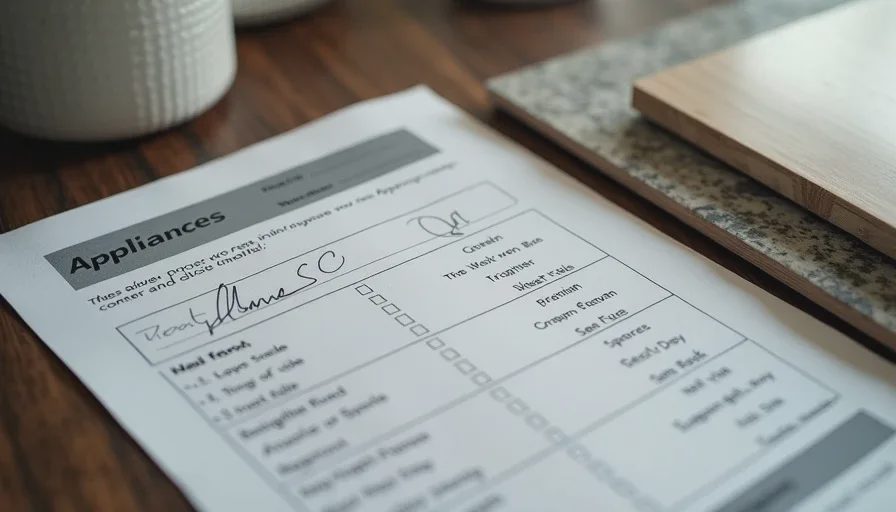
Contract Language That Reduces Allowance Risk
Useful provisions include:
A requirement that each allowance is supported by a written list of the specific products or unit prices used to calculate it
A statement that the allowance includes all related costs (tax, delivery, basic installation) unless explicitly excluded
A clear rule that differences between allowance and actual cost are handled by written change order before ordering
An explicit credit to the owner for any unused portion of an allowance
A deadline for homeowner selections and consequences for late decisions
Some homeowners also negotiate a small contingency line item separate from allowances. The contingency covers true unknowns. Allowances cover defined categories that simply have not been finally chosen. Keeping the two separate prevents the contingency from being absorbed by finish upgrades.
Practical Steps Before Signing
Review every allowance line item and ask three questions:
What specific products or unit prices were used to set this number?
Does the allowance include tax, shipping, and installation labor?
How will both overages and underages be handled in the final accounting?
If the answers are vague, treat the allowance as a soft number and either convert it to a fixed selection or increase it to a realistic level before signing. Compare the allowance amounts against current pricing from at least one supplier or showroom. A $2,000 gap on appliances or tile is easier to resolve at the quote stage than after the cabinets are installed.
Allowances are a tool for managing incomplete selections. They become a transfer of risk when the numbers are set low and the rules for adjustment are left undefined. The homeowner who treats every allowance as a provisional figure that must be validated or replaced before the contract is signed keeps control of the final price. The homeowner who accepts the numbers at face value often discovers the real cost only after the project is underway and the leverage to renegotiate has diminished.